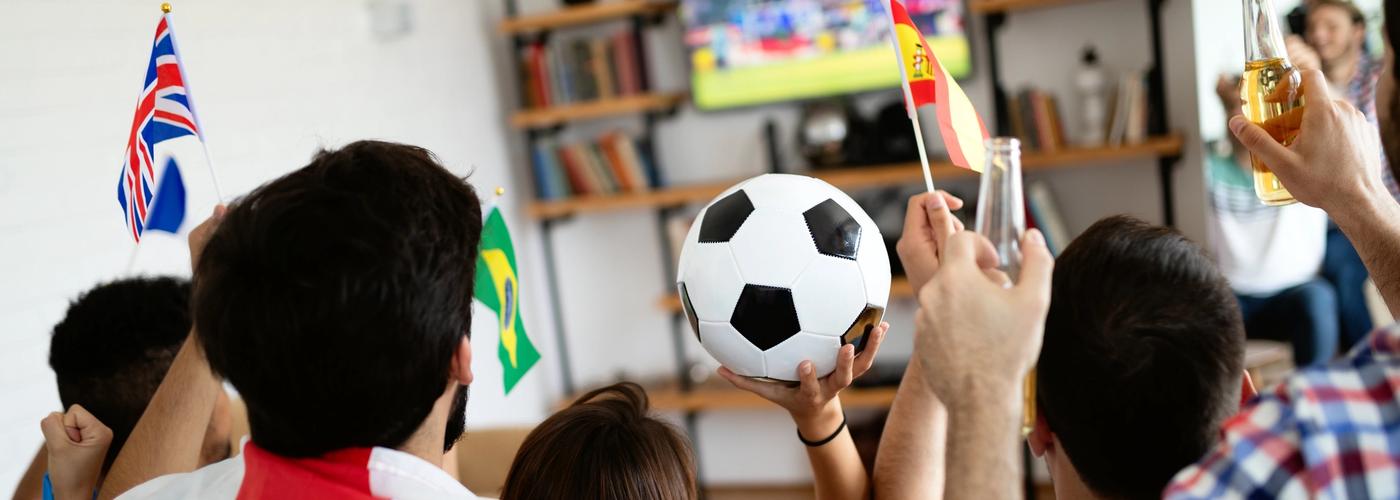
FIFA World Cup 2026 is broadcasting live from North America. For Hong Kong employees, that means matches at 6am, 9am, and late at night. The sick leave data from previous tournaments tells HR leaders exactly what to expect over the coming weeks.
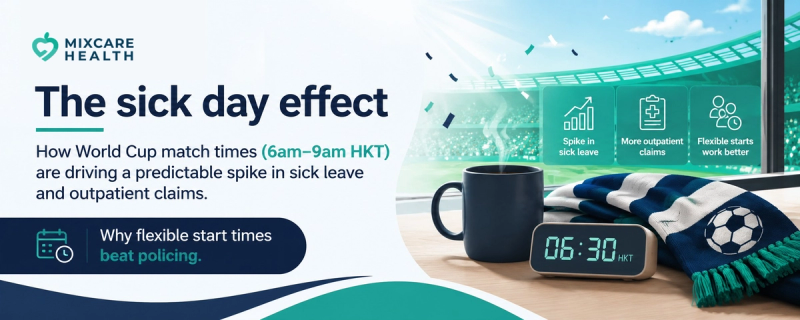
Key Takeaways
- Sick leave spikes during major football tournaments are well-documented — employer data from 2018 and Euro 2024 shows consistent absence increases tied to match schedules, with employee lateness rising 50% after key fixtures.
- Hong Kong's time zone amplifies the effect. Key matches broadcast at 6am–9am HKT sit directly across morning work schedules, making absence more likely than in European markets.
- The knockout stage runs through 19 July — HR teams should anticipate elevated leave requests through the quarter-finals (9–11 July) and semi-finals (14–15 July).
- Flexible start times and clear communication reduce fabricated sick days more effectively than enforcement — and cost less than a week of impaired productivity from presenteeism.
The knockout stage began on 28 June. For Hong Kong employees already disrupted by 6am and 9am group-stage kick-offs, the next four weeks will test HR teams in predictable ways. The sick leave data from 2014, 2018, and 2022 is consistent: unplanned absence clusters around match mornings and the days that follow. The question is not whether this happens — it is whether your response strengthens employee trust or quietly damages it.
What the data shows
People Management estimates global productivity losses at HK$126 billion during this tournament, with 3.6 million sick days predicted and HK$940 million in sick pay costs for UK employers alone. Employee lateness rose 50% following Euro 2024 matches — and 42% of employers still have no plan to manage the disruption.
Corporate responses are already shaping the conversation. Heineken — a FIFA World Cup 2026 official partner — has outlined a specific approach to reducing tournament-related sick leave through structured flexibility for its workforce. A Business Insider survey found a significant proportion of employees globally plan to call out sick to watch key matches rather than request planned leave — highlighting the gap between what employees want and what most employers currently offer.
For Hong Kong, the time zone creates additional exposure. A match kicking off at 3am UK time barely touches a workday. One beginning at 6am HKT runs through core morning hours. Employees in client-facing or shift-dependent roles face real pressure to fabricate illness rather than arrive visibly tired.
The practical implications right now
HR leaders in Hong Kong are looking at four weeks of continued disruption through the final on 19 July. Two realities to plan for:
- Leave requests will spike mid-week. Employees who have exhausted annual leave will default to sick days. Expect clusters around the quarter-finals (9–11 July) and semi-finals (14–15 July).
- Presenteeism costs more than managed absence. Employees working after a 6am match carry reduced cognitive output for a full day. A few managed leave requests costs your organisation less than a week of impaired productivity.
What effective HR teams are doing
The organisations managing this well treat the tournament as a short-term engagement opportunity, not a compliance problem. Policing absence during a globally watched sporting event signals distrust. The smarter response offers genuine options:
- Temporary flexible start times for the knockout stage. A 9:30 am or 10:00 am start on match mornings — available to all staff rather than applied case by case — removes the incentive to fabricate illness. The cost in productivity is lower than managing unplanned absence.
- Clear, consistent communication from HR. A short note confirming your flexibility position for the knockout stage costs nothing and prevents weeks of difficult conversations between managers and their reports.
MixCare's flexible benefits platform allows HR teams to configure FSA and wellness wallet parameters quickly, without a full benefits redesign. If your organisation does not currently offer flexible outpatient or wellness spend, the knockout stage is a practical moment to understand what that would look like.
See howMixCare's flexible benefits platform helps HR teams in Hong Kong respond quickly to workforce moments like this one. Book a personalised demo to walk through FSA configuration, wellness wallet options, and real-time spend visibility for your organisation.
Every two weeks, the MixCare HR Pulse Digest covers the latest research on workforce wellbeing in Hong Kong and Singapore, with practical guidance for HR leaders.
Sources
People Management: Will the World Cup lead to a major drop in workplace productivity? · HR Chief Magazine: Heineken — reducing sick leave in the FIFA World Cup 2026 · Business Insider: Employees plan to call out sick to watch the World Cup · Personnel Today: World Cup 2018 — six goals for employers · MixCare Health: Employee Benefits Platform
MixCare Health
MixCare Health · Hong Kong