
Workforce wellbeing programmes Hong Kong can help employers create healthier, more resilient teams. Explore practical strategies for supporting mental, physical, social and financial wellbeing in the workplace.
Key Takeaways
A useful wellbeing programme is practical, inclusive, and shaped by the working realities of Hong Kong. It should support people while giving employers clear ways to learn, improve, and manage resources responsibly.
- Define wellbeing broadly, covering mental, physical, social, and financial needs.
- Use employee insight and workplace data before choosing interventions.
- Combine universal prevention with confidential, targeted support.
- Adapt delivery for language, work patterns, commuting, and workplace culture.
- Measure participation, experience, behaviour, and organisational trends over time.
1. Understanding workforce wellbeing in Hong Kong
Workforce wellbeing is not a collection of occasional activities or a substitute for good management. It is the overall condition that enables employees to work safely, sustainably, and with a reasonable sense of connection and control. For employers, the strongest programmes link individual support with better systems, clearer expectations, and thoughtful benefits design. That makes workforce wellbeing programmes Hong Kong organisations can rely on a business practice, rather than a seasonal campaign.
a. What workforce wellbeing includes beyond mental health
Mental health deserves serious attention, but it is only one part of the picture. Physical safety, manageable workloads, financial confidence, social connection, inclusion, meaningful work, and access to appropriate care all influence how people experience their jobs. An employee may be offered counselling yet still struggle because of inflexible scheduling, poor ergonomic conditions, or benefits that do not fit their life.
A broader framework helps HR teams look at causes as well as symptoms. It also makes room for preventive education, everyday healthy choices, practical financial resources, and supportive relationships at work. The aim is not to make the employer responsible for every aspect of an employee’s life; it is to remove avoidable workplace barriers and provide sensible routes to help.
b. Why Hong Kong employees face unique workplace pressures
Hong Kong workplaces often bring together dense urban living, long commutes, demanding professional expectations, and teams spread across different generations and language preferences. Hybrid work can add flexibility for some employees while creating isolation or blurred boundaries for others. Frontline staff may face very different pressures from colleagues who work mainly at a desk.
Research and local discussion also point to the importance of work-life balance, which is shaped by personal, interpersonal, organisational, community, and policy factors. Employers can explore the workplace mental health challenges affecting Hong Kong workers without assuming that one intervention will suit every team. A useful response starts with listening, then addresses workload, access, manager behaviour, and support pathways together.
c. The business case for investing in employee wellbeing
Wellbeing affects the conditions under which people make decisions, collaborate, serve customers, and learn. When employees are exhausted or worried about basic financial and health needs, attendance and performance can suffer even when commitment remains high. A considered programme can also strengthen the employee experience by making benefits easier to understand and use.
The business case should remain realistic. Wellbeing initiatives do not guarantee lower turnover or higher productivity, and employers should avoid promising a simple return from a complex investment. Instead, set a clear purpose, establish a baseline, and examine whether support is reaching the people it was designed to serve.
d. How wellbeing connects to engagement, productivity, and retention
Engagement is influenced by whether people feel supported, respected, and able to do their work well. A manager who notices sustained fatigue and responds appropriately may prevent a small concern from becoming a prolonged absence. Likewise, benefits that employees can access without excessive paperwork are more likely to be experienced as useful rather than symbolic.
The relationship is reciprocal: healthy work conditions support sustained performance. Track wellbeing alongside workload, absence, retention, and employee experience, while remembering that correlation is not proof of causation. This balanced view helps leaders make improvements without reducing people to productivity metrics.
2. Assessing your organisation’s wellbeing needs
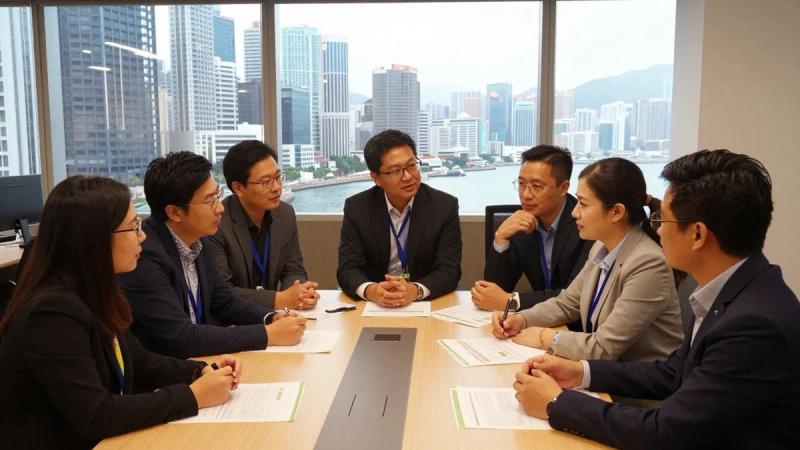
A programme should begin with diagnosis, not a catalogue of popular activities. Employees may value different forms of support depending on their role, stage of life, work location, and family responsibilities. Combining qualitative feedback with operational information gives HR a more credible picture of what is happening. It also helps distinguish a communication problem from a genuine gap in benefits or care.
a. Combining employee surveys with workplace data
A short, well-designed survey can ask about energy, workload, psychological safety, access to benefits, and preferred support. Interviews or small listening groups add context that rating scales miss. Workplace data such as absence patterns, overtime, turnover, employee assistance usage, and participation can then test whether the themes appear in day-to-day operations.
Use several data sources rather than treating one survey as definitive. Compare findings by team and work arrangement where sample sizes allow, and repeat the core questions periodically so that changes can be seen. The purpose is to identify priorities, not to create a ranking of departments or expose individual struggles.
b. Identifying mental, physical, social, and financial wellbeing gaps
A useful assessment separates different dimensions while recognising their overlap. Ask whether employees can find confidential mental health support, work in physically suitable conditions, maintain social connection, and understand the financial value of their benefits. Questions should also test practical access: opening hours, language, digital usability, eligibility, and likely out-of-pocket cost.
These findings can be organised into a simple priority matrix. High-impact, easily addressed issues may include unclear referral information or poor workstation guidance; deeper issues may involve staffing levels, manager capability, or benefit design. The assessment becomes valuable when it leads to decisions, owners, and realistic timing.
c. Segmenting needs across roles, age groups, and work arrangements
A single average can conceal important differences. Compare office-based, frontline, shift, hybrid, and remote employees, while avoiding assumptions based solely on age or job title. Consider caregiving responsibilities, tenure, accessibility needs, and language preferences where employees have voluntarily shared relevant information.
Segmentation should guide service design, not label people. For example, a frontline team may need short, on-site sessions, while a dispersed team may need virtual access and asynchronous resources. Always report small groups carefully so that useful insight does not make individuals identifiable.
d. Protecting confidentiality and building trust in assessments
Employees will give more candid answers when the purpose, data handling, and reporting limits are explained in plain language. Tell people who can access raw responses, how results will be aggregated, how long data will be retained, and whether participation is voluntary. External administration may be appropriate when employees are unlikely to trust an internal process.
Trust also depends on visible follow-through. Share the themes you heard, explain what will change, and be honest about what cannot be addressed immediately. A survey that disappears into a folder can reduce participation in every later assessment.
3. Designing an effective wellbeing programme
Design turns evidence into a manageable set of commitments. The best programme is not necessarily the one with the most sessions, providers, or features; it is the one employees can understand and use. Start with a small number of priorities, assign accountability, and make the experience consistent across communication, access, and follow-up. Build flexibility in from the beginning rather than adding it after low participation appears.
a. Setting clear goals and measurable outcomes
Goals should describe the change the organisation wants to see. Examples include improving awareness of available support, increasing access to preventive resources, reducing barriers to care, or strengthening manager confidence. Each goal needs an owner, a baseline, a target timeframe, and a method for checking progress.
Avoid vague promises such as making everyone healthier. A more useful outcome might be that employees can identify where to seek confidential support, or that managers complete training and demonstrate appropriate referral behaviours. Clear outcomes make budget discussions and programme reviews more grounded.
b. Balancing prevention, early support, and professional care
A complete programme has several levels. Prevention may include workload conversations, sleep and movement education, financial guidance, and healthy team norms. Early support can include confidential coaching, manager referral pathways, or screening resources. Professional care should be accessible when needs exceed what an employer initiative can safely provide.
Employers must not ask managers or peers to act as clinicians. Define escalation routes, emergency guidance, and the boundaries of confidentiality. This protects employees and gives managers a practical response when a concern is more serious than a workplace conversation.
c. Combining organisation-wide initiatives with targeted support
Universal activities help make wellbeing part of normal work and reduce the sense that support is only for people in crisis. Targeted options are still necessary for groups experiencing specific pressures, such as new managers, shift workers, caregivers, or employees returning after extended leave. The two layers should connect through a clear, confidential access path.
At this stage, employers may consider a configurable benefits ecosystem such as MixCare Health, whose documented offering includes customisable employee benefit programmes for organisations with 200 or more employees across Asia-Pacific, along with analytics, compliance, and HR integration. It should be evaluated against the organisation’s needs, governance requirements, employee profile, and implementation capacity rather than selected as a generic answer.
d. Adapting programmes for hybrid, frontline, and office-based teams
Delivery matters as much as content. Hybrid employees may need equal access to virtual and in-person options, while frontline workers may need short sessions at shift-friendly times. Office-based teams may benefit from ergonomic reviews and protected breaks, but they should not be assumed to share the same needs as every other office team.
Test the practical journey from invitation to participation. Check whether employees can register from a phone, join without losing pay or work coverage, and understand what happens after an activity. Small operational details often determine whether a well-designed programme becomes part of working life.
4. Core components of workforce wellbeing programmes
A balanced programme combines education, access, social connection, and leadership practice. Activities should be chosen for a reason and connected to the needs assessment, rather than added because they are fashionable. Employers should also explain what is available, who it is for, and how privacy is handled. Variety matters, but coherence matters more.

a. Mental health education and psychological support
Education can help employees recognise stress, understand common reactions, and find appropriate support earlier. It should avoid diagnosing people or presenting resilience as an individual duty to tolerate unhealthy systems. Confidential counselling, coaching, referral networks, and crisis guidance may sit alongside education when suitable safeguards are in place.
Content should be accessible and practical. Short sessions, manager guidance, and clear signposting can be more useful than occasional technical lectures. Review language carefully so that it does not stigmatise people who ask for help or imply that every difficulty can be solved through self-care.
b. Physical health, movement, and ergonomics initiatives
Physical wellbeing includes safe work, movement, rest, preventive care, and suitable equipment. For desk-based teams, ergonomic advice and workstation adjustments may prevent recurring discomfort. For frontline or mobile workers, safe movement, fatigue management, hydration, and access to breaks may be more relevant.
Offer choices rather than prescribing one ideal lifestyle. A brief guided activity, an education session, and practical access to preventive services can reach different employees. Any activity should be voluntary, inclusive of disability and health conditions, and scheduled so that participation does not create pressure.
c. Financial wellbeing and practical resources
Financial stress can affect concentration, sleep, health decisions, and willingness to remain in a job. Employers can help by making total rewards clearer, signposting trusted advice, explaining claims and eligibility, and considering flexible ways for employees to use approved health and wellness benefits. Communication should be factual and free from judgement.
The most useful support is often concrete. Employees need to know what a benefit covers, how much it costs, what documentation is required, and where to ask questions. If a digital wallet or flexible allowance is offered, explain categories and limits before launch and provide help for people who are less comfortable with digital tools.
d. Social connection, inclusion, and workplace belonging
Belonging grows through everyday interactions, fair treatment, and opportunities to participate, not only through social events. Teams can use peer learning, inclusive meetings, recognition, mentoring, and carefully designed group activities to strengthen connection. Participation should never require employees to disclose personal health information or join activities outside their comfort level.
A marketplace model can broaden choice when it is governed well. For example, the MixCare Wellness Marketplace is documented as offering more than 3,000 employee wellness services, including yoga, nutrition, and mental health support, with access through FSA wallets or pre-funded accounts. Employers should still check provider quality, accessibility, cultural fit, and data practices before recommending any service.
e. Manager training and psychologically safer leadership
Managers shape workload, flexibility, feedback, and the daily experience of support. Training should help them notice changes in behaviour, hold respectful conversations, make reasonable adjustments, and refer employees to appropriate resources. It should also clarify what managers must not promise and when an issue needs HR, occupational health, or emergency support.
Training is most credible when leaders are given time and authority to act. If managers are told to support wellbeing while carrying impossible workloads, the programme sends a contradictory message. Include manager feedback in reviews and address organisational conditions as well as individual skills.
5. Adapting programmes to Hong Kong workplaces
Local fit is more than translating a poster. It involves understanding how employees communicate, when they can attend, whom they trust, and how benefits interact with existing medical and workplace practices. Hong Kong teams may include employees with different cultural expectations and varying comfort with discussing mental health. A programme should be locally relevant while maintaining consistent standards for fairness and privacy.
a. Considering local culture, language, and communication preferences
Communication should be direct, respectful, and specific about practical value. Some employees may prefer private digital access; others may respond better to a trusted manager, provider, or in-person briefing. Avoid assuming that silence means agreement or that low attendance means low need.
Pilot messages with representative employees before a full launch. Use examples that reflect different family situations, work settings, and levels of seniority. Clear explanations of confidentiality are especially important when wellbeing has traditionally been treated as a private matter.
b. Supporting employees across Cantonese, English, and Mandarin
Language access should cover more than translated headlines. Registration steps, provider information, consent wording, FAQs, and support conversations should be available in the languages employees actually use. Where professional care is involved, confirm the provider’s language capability rather than relying on a general platform label.
Offer employees a choice where possible and avoid making them repeat sensitive information to obtain language support. Consistent terminology also matters: unclear translations of counselling, claims, eligibility, or urgent care can create hesitation at the point when help is needed.
c. Addressing long working hours, commuting, and dense urban environments
A programme cannot compensate for chronic overload, but it can make healthy choices more feasible. Consider short sessions, multiple time slots, mobile access, nearby providers, and support that employees can use without a long journey. Protect participation time rather than expecting people to attend only during personal hours.
Review workload and meeting norms alongside activities. A meditation session may be welcome, but it will have limited effect if employees cannot take breaks or are routinely contacted late at night. Practical changes to scheduling and expectations often reinforce the credibility of wellbeing initiatives.
d. Working with local providers and community resources
Local providers can bring language capability, cultural understanding, and knowledge of Hong Kong’s care pathways. Assess qualifications, safeguarding, accessibility, data handling, service capacity, and escalation procedures before contracting. Keep a current directory so employees do not encounter outdated contact details.
Employers should also clarify the boundary between workplace support and public or clinical services. A provider network can widen access, but it does not remove the need for informed consent, appropriate referral, and careful handling of sensitive information.
6. Implementing and promoting the programme
Implementation is where a good design becomes an employee experience. Set a realistic launch sequence, define responsibilities, test the access journey, and prepare responses to likely questions. Employees are more likely to participate when support feels convenient, relevant, and safe. Promotion should continue after launch without becoming noise.
a. Securing leadership sponsorship and allocating resources
Senior sponsorship should be visible but not performative. Leaders can explain why the programme matters, protect time for participation, and connect wellbeing to wider people and operating priorities. The budget should include provider fees, communications, training, administration, accessibility, evaluation, and contingency rather than only the headline activity cost.
Assign an accountable programme owner and a cross-functional working group where appropriate. HR, finance, legal, IT, communications, and employee representatives may each identify risks or practical requirements that one team would miss. A staged launch can make learning affordable and manageable.
b. Training managers to recognise concerns and respond appropriately
Managers need a simple framework: notice, ask, listen, support, and refer. Training should use realistic scenarios, including an employee whose performance changes, someone asking for flexibility, and a colleague who raises a serious safety concern. The goal is not to make managers therapists; it is to help them respond calmly and within their role.
Follow-up resources should be easy to find. A manager may remember the principle but forget the referral route, especially during a busy period. Provide concise guidance, escalation contacts, and periodic refreshers without asking managers to record unnecessary personal details.
c. Making support easy to access without creating stigma
Access should be private, simple, and available through more than one route. Employees may use a mobile portal, a provider directly, HR, or a trusted manager depending on the service and their comfort. Avoid requiring public sign-ups for sensitive support or making participation visible to colleagues.
Use neutral, inclusive language and make everyday resources available to everyone. When support is framed as a normal part of benefits rather than a response to failure, employees may feel less exposed. Accessibility should include digital usability, physical access, language, and reasonable scheduling.
d. Using internal communications to drive participation
A launch email is rarely enough. Use a sequence of short messages, manager briefings, onboarding content, reminders, and practical examples. Explain the action employees should take, the time required, the eligibility rules, and where to get help if registration does not work.
A compact communications plan can keep the programme consistent:
- Introduce the purpose and available support before launch.
- Show employees how to access one relevant service.
- Reinforce confidentiality and language options.
- Share aggregate participation updates without identifying individuals.
After each communication, review questions and drop-off points. Repeated confusion usually signals that the process or wording needs improvement, not that employees are uninterested.
e. Protecting privacy when handling sensitive employee information
Collect only information needed for a defined purpose and restrict access accordingly. Separate individual clinical or benefits data from management reporting, use aggregation for dashboards, and document retention and deletion practices. In Hong Kong, privacy obligations and internal governance should be considered before any data collection or provider integration.
Employees should know what is and is not shared with their employer. Contracts with providers should address security, breach response, subcontractors, and permitted use. Clear governance supports trust and makes it easier to explain the programme without making promises the organisation cannot keep.
7. Measuring programme performance and improving over time
Measurement should help leaders make better decisions, not turn wellbeing into a scorecard of personal behaviour. Start with the outcomes defined during design and combine quantitative signals with employee experience. Review results at a sensible cadence, protecting confidentiality when groups are small. The most useful question is often what should change next.
a. Choosing meaningful wellbeing KPIs
Useful indicators might include awareness of available support, access time, participation by work arrangement, satisfaction with the experience, manager confidence, and employee-reported ability to find help. Operational measures such as benefit utilisation, repeat access, absence, and retention can add context when interpreted carefully.
Choose a small dashboard that reflects the programme’s purpose. If the goal is better access, measure access and completion rather than only event attendance. If the goal is prevention, look for changes in knowledge, confidence, and early support-seeking behaviour, while recognising that these may take time.
b. Tracking participation, satisfaction, and behavioural changes
Participation tells you who used something, not whether it helped. Pair registration and attendance with short feedback questions, completion patterns, and qualitative comments. Monitor whether employees return, recommend a service, or report greater confidence in finding support.
Segment results only where privacy can be protected. A low participation rate may reflect inconvenient scheduling, unclear communication, or distrust rather than a lack of need. Conversely, high attendance at one event does not prove that the whole programme is effective.
A short educational video can support consistent communication, but it should sit alongside human support and clear referral information. Digital content is an entry point, not a substitute for professional care or changes to unhealthy work conditions.
c. Connecting wellbeing data with absenteeism and retention trends
Organisational data can show whether wellbeing priorities coincide with changes in absence, turnover, overtime, or employee experience. Examine trends over time and compare them with business changes such as restructuring, seasonal demand, leadership changes, or policy updates. This prevents a programme from receiving credit or blame for unrelated events.
Do not expose individual health information to line managers or use wellbeing data as a covert performance tool. Aggregate reporting can support planning while preserving trust. Where possible, involve privacy and people analytics specialists in deciding what comparisons are appropriate.
d. Gathering employee feedback and refining initiatives
Create regular opportunities for employees to comment on relevance, accessibility, provider quality, and communication. Close the loop by publishing what was heard and what will change. A programme that evolves visibly is more likely to earn participation than one that repeats the same calendar every year.
Prioritise improvements by impact and feasibility. You might simplify registration, add a language option, adjust session times, or replace a poorly matched provider. Record the decision and revisit it after implementation so that refinement becomes a normal management cycle.
e. Avoiding common measurement and interpretation errors
Common mistakes include counting attendance as impact, comparing groups with different levels of access, treating self-reported feelings as clinical evidence, and drawing conclusions from very small samples. Another error is collecting more personal information than the programme needs. These practices can damage trust while producing misleading certainty.
Use consistent definitions, document limitations, and present findings with context. Leaders should be comfortable hearing that a result is inconclusive or that a change needs further testing. Careful interpretation is not a weakness; it is what makes wellbeing measurement responsible.
Conclusion
Effective workforce wellbeing programmes Hong Kong employers can sustain are built around listening, practical access, local relevance, and responsible measurement. When employers connect supportive leadership with flexible benefits, appropriate care, and clear governance, wellbeing becomes part of how work is designed rather than an isolated initiative.
Frequently Asked Questions
What should a workforce wellbeing programme include?
It should usually combine mental health support, physical wellbeing, financial resources, social connection, inclusive practices, and manager capability. The exact mix should follow employee needs, organisational priorities, and available professional services.
How should an employer assess wellbeing needs?
Use a combination of anonymous surveys, listening sessions, workplace data, and benefit utilisation information. Explain the purpose and privacy arrangements clearly, then use the findings to set a limited number of practical priorities.
How can programmes support employees in different roles?
Offer different formats, timings, access routes, and content for office-based, hybrid, frontline, shift, and remote teams. Test the employee journey for each group rather than assuming that a single digital or in-person format will work for everyone.
How can employers reduce stigma around mental health support?
Make support a normal part of the benefits experience, communicate confidentiality plainly, and ensure leaders model respectful behaviour. Avoid requiring public participation or suggesting that employees must disclose personal information to receive help.
Should managers be responsible for identifying mental health conditions?
No. Managers can notice changes, ask supportive questions, listen, and refer employees to appropriate resources, but they should not diagnose or provide clinical treatment. Training should define boundaries and escalation routes.
How often should a wellbeing programme be reviewed?
Review participation and operational issues regularly, with a more structured evaluation at least annually or after a major change. The frequency should reflect the programme’s scale, risk, and the speed at which employee needs change.
Which wellbeing metrics matter most?
The most useful metrics depend on the programme’s goals, but they often include awareness, access, participation, satisfaction, employee-reported confidence, benefit utilisation, and relevant workforce trends. Interpret them together and protect confidentiality throughout.
MixCare Health
MixCare Health · Hong Kong