
A flexible employee benefits platform helps Hong Kong employers offer more relevant benefits while keeping budgets and administration manageable. Learn how these platforms work, what employees can choose, and what to consider when assessing one for your workforce.
Key Takeaways
A flexible benefits platform gives employers a structure for offering employee choice while retaining control over programme design and budgets. Its value depends on clear rules, suitable options and thoughtful implementation.
- Employees can choose from employer-defined benefits rather than receive only a fixed package.
- Allowances and eligibility rules help employers set boundaries around choice and spending.
- Digital self-service may make enrolment and routine benefit management easier to navigate.
- Employers should assess provider coverage, privacy, integrations, service and usability before choosing a platform.
- Regular reviews help ensure the programme remains relevant to workforce needs and budget priorities.
1. What a flexible employee benefits platform is
A flexible employee benefits platform is a digital way to present and administer benefits within an employer-defined programme. It can give employees choices while leaving the employer responsible for deciding what is offered, who is eligible and how the budget is set. For employers considering a flexible employee benefits platform Hong Kong teams can use, the central question is how to balance employee choice with a manageable, clearly governed plan.
a. How it differs from a traditional benefits plan
A traditional plan often presents a largely standard set of benefits to employees, whereas a flexible plan introduces choice among approved options. The employer still defines the menu and the limits; flexibility does not mean an unrestricted allowance or an open-ended catalogue. The distinction is in where choice sits: within the boundaries established by the organisation, employees can select benefits that better fit their circumstances.
b. How employers set allowances and benefit choices
Employers generally define the budget, eligibility rules and categories employees can choose from before a programme opens. The precise arrangement will depend on workforce needs, the benefits available and the organisation’s funding approach. This simple comparison shows how the components can relate without prescribing one model:
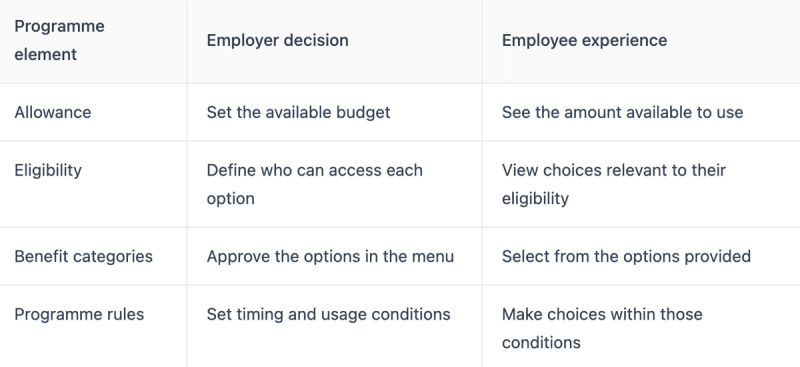
The table is a starting point for design, not a substitute for documenting the rules. Clear definitions help employees understand the choices and help administrators apply the same boundaries consistently.
c. How employees select and manage their benefits
Once the programme is available, employees can review the options they are eligible for and make selections within the allowance or rules provided. In MixCare Health’s Flexible Benefits offering, employees choose their own benefit mix from a menu of employer-defined options and allocate their allowance across categories they value most. For any platform, the employer should explain when selections can be changed and what happens if an employee needs support.
d. How the platform connects employers, employees and providers
A platform can act as the digital point where programme rules, employee choices and benefit information are brought together. The employer defines the programme, employees make selections, and providers fulfil the benefits they offer; the exact hand-offs depend on the platform and provider arrangements. Before implementation, it is useful to map who is responsible for each step, including updates, questions and any required employee information.
2. How it supports Hong Kong employers
Hong Kong employers may have teams with varied roles, life stages and expectations of workplace benefits. A flexible programme can offer choice without requiring every employee to receive an identical package, but it still needs to fit the organisation’s budget and operating practices. The aim is not to offer the largest menu; it is to make relevant choices understandable and practical to administer.

a. Adapting benefits to a diverse, multigenerational workforce
Employees may value different kinds of support at different points in their working lives. A menu of employer-approved choices can make room for those differences, provided the categories are clear and useful to the people who will select them. Employers can start by asking employees what they understand, use or find difficult about the current package, rather than assuming that age alone predicts preferences.
b. Offering choice while keeping benefits within budget
Choice is most useful when it has clear financial boundaries. Employers can set a defined allowance, restrict selections to approved categories and assess the likely cost of different programme designs before launch. The result is a framework for budgeted employee choice: employees decide among available options while the organisation retains control over the overall funding approach.
c. Supporting talent attraction, retention and employee wellbeing
Benefits can form part of the overall employee experience, but a flexible programme is not, by itself, a guarantee of improved recruitment, retention or wellbeing. Its practical contribution is to make a range of employer-selected options available in a way employees can understand and use. Employers can explore Hong Kong benefits guidance for related considerations such as wellbeing, healthcare costs and benefits strategy.
d. Accounting for local expectations and employment practices
Programme design should reflect the organisation’s own workforce and the obligations that apply to its employment arrangements. Employers should confirm how proposed choices relate to existing benefits, statutory requirements, tax treatment and internal policies with appropriate advisers. Clear documentation is especially useful when employees need to understand what is included, what is optional and where to ask questions.
3. The core features employers can expect
The features of a flexible benefits platform vary, so employers should assess them against the actual work they need the system to support. Common areas to examine include the employee selection journey, the way allowances are represented and how programme information can be reviewed. Avoid assuming that a feature is included simply because it is typical of digital platforms; confirm the scope with the provider.
a. A central place to view and administer benefits
A central view can help employees understand their available choices and help administrators see how the programme is arranged. The MixCare Health Flexible Spending Account (FSA) is a digital employee wallet that employers fund, allowing employees to spend on pre-approved health and wellness categories. Employers considering a central benefits view should check which benefits it covers and how information is kept current.
b. Employee enrolment and self-service tools
An online enrolment journey can give employees a place to review options and make choices without relying on a series of separate forms. The quality of that experience depends on clear descriptions, accessible guidance and a process for resolving questions when an employee is unsure. A platform demonstration should include the employee view as well as the administrator view, since both shape how easily the programme can be used.
A practical demonstration can help stakeholders assess how choices are presented, whether the journey is easy to follow and what information employees may need before they enrol. These details matter as much as the feature list when a programme is being introduced to a real workforce.
c. Allowance tracking and benefit usage reporting
Employers may want to understand how employees use an allowance and which options attract participation, subject to the reporting available in the platform. The MixCare Health Wellness Marketplace is a curated network of wellness providers accessible directly through the MixCare platform. When assessing reporting, ask what measures are available, how frequently they are updated and what level of detail administrators can see.
d. Integrations with HR, payroll and benefit providers
Integration requirements vary with an organisation’s existing systems and operating model. Employers should identify the information that needs to move between systems, who maintains it and how exceptions will be handled, then confirm what the platform can support. Do not assume that a named integration, automated transfer or particular workflow is available unless the provider confirms it for the proposed configuration.
4. How it can simplify benefits administration
Administration can become difficult when enrolment, employee questions and updates are spread across different processes. A platform may bring some of those activities into a more consistent digital workflow, depending on its functions and the way the employer configures the programme. The goal is not simply to move paperwork online; it is to make responsibilities and information easier to follow.

a. Reducing manual enrolment and routine queries
Clear digital information can reduce avoidable back-and-forth by helping employees find the choices, rules and steps relevant to them. Administrators should still plan for questions that need individual attention, such as eligibility exceptions or changes that require review. A useful launch process pairs self-service information with a clear route to human support.
b. Managing eligibility, allowances and life-event changes
Eligibility rules and allowance amounts should be documented before enrolment begins, including who can approve changes and when updates take effect. Employers also need a process for life events or employment changes that may affect an employee’s options. The platform’s role should be confirmed against these rules; do not assume it will automatically interpret every policy or change.
c. Coordinating data across vendors and internal teams
Where several providers and internal teams are involved, a written responsibility map can prevent important details from being missed. It can identify who supplies data, who checks it and who responds when something does not match. For example, employers may map the main hand-offs as follows:
- HR confirms employee eligibility and programme changes.
- Benefits administrators maintain the approved choices and programme rules.
- Providers clarify the services, terms and information they require.
- Employees receive guidance on selections and where to direct questions.
This list is a planning aid rather than a claim that one platform performs every task. Assigning an owner to each hand-off helps reveal gaps before the programme goes live.
d. Improving visibility into participation and spending
Participation and spending information can help employers review whether the programme is being used as intended, if those measures are available in the chosen platform. Read the reporting definitions carefully: a total, a participation figure and a category-level view can answer different questions. Use the information alongside employee feedback, rather than treating a single usage measure as proof that a benefit is meeting every need.
5. What to assess before choosing a platform
Choosing a platform involves more than comparing feature lists. Employers should consider the range of benefits they intend to offer, the systems and providers involved, and the experience employees will have when making choices. A structured assessment also helps distinguish confirmed capabilities from assumptions that need to be checked with the provider.
a. Benefit options and provider coverage in Hong Kong
Start by listing the benefits employees should be able to select and identify the providers needed to deliver them. Confirm which options are available in Hong Kong, what conditions apply and whether each provider’s service model suits the workforce. Employers planning their approach can also consult flexible benefits plan design guidance on needs, budgets, compliance and implementation.
b. Data security, privacy and access controls
Employee benefits information can involve personal data, so employers should understand what information is collected, why it is needed, how it is protected and who can access it. Ask about access permissions, retention, incident processes and the relevant contractual responsibilities. Hong Kong employers should evaluate these points against their own privacy obligations and seek suitable legal or security advice where needed.
c. Integration needs and support for existing HR systems
Prepare an inventory of systems that may need to exchange information with the platform, including the purpose and frequency of each exchange. Ask providers to explain supported integration methods, implementation responsibilities and the handling of failed or incomplete transfers. A clear answer should distinguish what is available now from work that may require configuration or a separate arrangement.
d. Pricing, service support and employee usability
Compare pricing with the services and support included, and clarify any costs that depend on employee numbers, benefit choices or implementation needs. Ask how administrators and employees get help, what response arrangements apply and what materials are available for launch. Finally, test the employee journey with people who represent different roles and levels of digital confidence; a polished demonstration alone cannot show how well it works in everyday use.
6. How to introduce a flexible benefits platform
A successful introduction begins with programme decisions, not software configuration. Employers should understand what they want the benefits to achieve, what employees need and which constraints must be observed. Phased preparation gives teams time to resolve questions before employees are asked to make selections.
a. Define workforce needs and programme objectives
Gather input from employees and internal stakeholders to identify what is working, what is missing and what the organisation can realistically support. Turn those findings into a small number of practical objectives, such as improving choice, clarifying benefit information or making administration more consistent. Keep the objectives specific enough to review later, and avoid promising outcomes that the programme cannot guarantee.
b. Set budgets, eligibility rules and benefit categories
Once objectives are clear, define the available budget, eligibility criteria, categories and any limits on employee selection. Test the proposed rules against different employee circumstances and confirm that administrators can apply them consistently. Employers may use Hong Kong plan-design guidance as one reference while making decisions suited to their own workforce and arrangements.
c. Communicate choices and guide employee enrolment
Employees need more than a list of benefit names: they need plain-language explanations of what each option covers, how to choose and where to get help. A practical communication plan can include several steps:
- Explain the purpose and boundaries of the programme.
- Describe each option, including relevant conditions and limitations.
- Set out enrolment dates and the steps employees need to take.
- Provide a contact route for questions and accessibility support.
Use feedback from employees and managers to check whether the material is understandable before it is distributed widely. Communication should make the choices easier to compare without suggesting that every option suits every person.
d. Review usage and adjust the programme over time
After launch, review available participation and spending information alongside employee questions and feedback. Look for patterns that may indicate confusion, unsuitable categories or barriers to enrolment, then investigate before changing the programme. Regular review keeps the design connected to workforce needs while allowing employers to retain oversight of costs and rules.
Conclusion
A flexible benefits platform can give employees meaningful choices within a programme designed and funded by the employer. The strongest approach is deliberate: define the options and rules, check local requirements and provider arrangements, and make the selection process clear. With ongoing review, employers can keep the programme grounded in both employee needs and operational realities.
Frequently Asked Questions
Flexible benefits combine employee choice with employer-defined boundaries, and the details differ between organisations. The questions below address common considerations when assessing or introducing a programme. Employers should confirm legal, tax and provider-specific matters for their own circumstances.
What is a flexible employee benefits platform?
It is a digital system used to present or administer a benefits programme in which employees can choose from options set by their employer. The exact functions depend on the platform and its configuration.
How is a flexible benefits plan different from a traditional plan?
A flexible plan gives employees some choice among approved options, while a traditional plan may offer a more standard package. In both cases, employers define the programme and its limits.
How do employers set employee allowances?
Employers decide the funding approach, eligibility conditions and benefit categories based on their objectives and budget. The rules should be clear before employees make selections.
Can employees choose any benefit they want?
Usually, choices are limited to the options the employer has approved and any relevant eligibility or spending rules. A flexible programme does not necessarily mean an unrestricted choice of benefits.
What should Hong Kong employers check before choosing a platform?
They should assess benefit availability and provider coverage, privacy and access controls, system requirements, costs, service support and the employee experience. Legal and tax questions should be reviewed with appropriate advisers.
How can a flexible benefits platform help with administration?
Depending on its capabilities, a platform may make programme information and employee selections easier to manage in one digital process. Employers should confirm which tasks it supports and how exceptions are handled.
How often should employers review their benefits programme?
Employers can set a review cycle that considers available usage information, employee feedback, costs and changes in workforce needs. The right timing depends on the programme and the organisation’s operating calendar.
MixCare Health
MixCare Health · Hong Kong